

Cell phone towers are utilized to facilitate mobile communication. Common locations for these towers include rooftops, cellular phone antennas, and utility poles.
Radiation from cell phone towers is normally strongest within 50 meters of the antenna, then decreases steadily thereafter. Therefore, it is essential to keep a safe distance from a 5G cell tower.
1. The Tower's Elevation
The brand new 5G technology operates at higher frequencies than previous iterations, and these higher frequency waves have difficulty penetrating obstructions. This necessitates the installation of numerous small cells, or smaller structures, in cities and communities around the globe. 5g cell towers dangerous will be significantly closer together than conventional cell towers, creating a limitless stream of RF radiation for everybody in the vicinity.
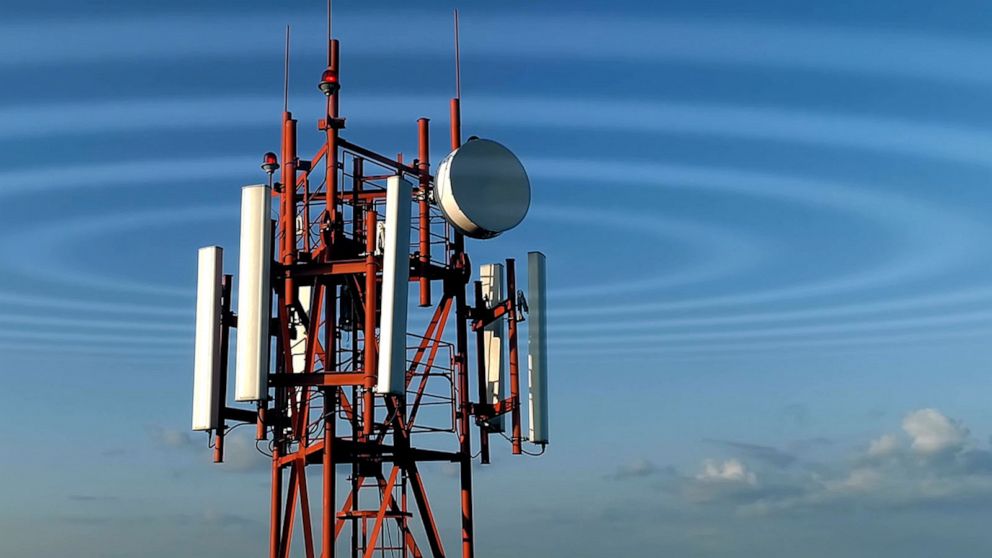
https://www.pearltrees.com/pillowcrack9/item519230169 are concerned these new compact cell antennas will undoubtedly be hazardous. They fear that residing near them increase their risk of developing cancer or other health problems. However, these concerns are baseless. These antennas emit radiofrequency (RF) energy a huge selection of times below safety standards. Furthermore, studies have demonstrated that residing near cell towers does not increase the risk of disease.
The typical selection of a cell tower is between 1 and 3 miles. This range is dictated by the tower's apparatus and the terrain it covers. In urban environments, the common range is between 0.25 miles and 1 mile.
The Signal's Frequency
Radio Frequency (RF) radiation emitted by cell towers can be hazardous. 5g cell tower safety is with the capacity of penetrating the body and causing vertigo, migraines, and also cancer.
Cellular towers start using a broad spectrum of frequencies to transmit voice and data. Lower frequency signals, such as for example 600 MHz and 700 MHz, have a wider selection of coverage than higher frequency signals. For instance, a cell tower employing 2.5 GHz frequencies can cover at the very least three miles. However, a cell tower employing C-band (3.5 GHz) frequencies can only transmit its signal up to a distance of around 1 mile.
To improve the performance of cellular networks, businesses must install more cells in urban areas. To accomplish this, more cell towers must be constructed and placed closer together. Therefore, the cell site radius has gradually decreased as time passes. Currently, nearly all cell towers in urban environments are 0.25 miles to 1 1 mile apart.

This has increased concerns regarding 5G, since it necessitates more cell sites. Additionally, some individuals are concerned that these cell sites will be useful for surveillance purposes. For example, some believe that stingray cell towers will proliferate because of the addition of 5G. These stingrays transmit signals to cell phones that may identify and locate the user.
The effectiveness of the Signal
The signal's intensity indicates just how much energy is being transmitted by the signal. The higher the capacity, the higher the number of energy transmitted. The signal's strength is also affected by the signal's frequency and the amount of time it is transmitted.
Many individuals are concerned about the health, privacy, and safety hazards posed by 5G cell towers. Also, they are concerned that the structures will reduce the value of these homes. Some communities are even wanting to outright prohibit the installation of these cell towers.
Some 5G-related concerns stem from the fact that it consumes substantially more energy than previous wireless technologies. This escalates the likelihood that radiation will be emitted from the structures. Additionally, there are concerns that rays from the structures may lead to cancer and coronary disease.
However, these concerns are baseless. Studies have shown that the levels of radiofrequency (RF) radiation emitted by 5G towers are hundreds or thousands of times lower than safety standards. Furthermore, cell tower radiation isn't ingested by living tissue and cannot enter our body. Furthermore, the wavelengths of 5G signals are shorter than those of older cellular phone technologies. Therefore, they are able to only travel brief distances, and cell towers should be closer together than previously.
4. 5g cell tower radiation Between You and the Tower
Concerns exist that more cell towers will undoubtedly be required as the transition from 4G to 5G continues. This is because of the fact that the 5G network will operate at higher frequencies, that have a far more difficult time traversing over long distances and through obstacles such as for example trees, structures, and slopes. Subsequently, cell antennae must be placed much closer together than in previous iterations of technology, meaning you're constantly surrounded by more transmitters.
The issue is that many individuals mistake small cells for a 5G cell tower. Small cells are antennas that supplement large macro-towers in the creation of wireless networks, and they are frequently mounted on utility poles or light poles. Because of their proximity to residences, some individuals inaccurately conflate them with 5G technology, despite the fact that they are not considered to be part of a cellular phone tower.
Within the first portion of the tower's radius, cellular phone radiation is strongest, and it decreases as you move further away. Studies show that a lot of people who reside near a cellular phone tower experience physical discomforts such as migraines and dyspepsia. A ten-year study conducted in Germany observed inhabitants residing within 400 meters of two cell phone towers. Those who lived closer to the tower were diagnosed with cancer three times more frequently than those that lived further away.